

Ice is food, and it’s regulated as such. Yet in many kitchens, ice handling and machine upkeep slip down the list until an inspector calls out slime in the bin, a missing air gap, or a scoop buried in service ice. This guide shows how to build strong practices around HACCP, sanitation, and the inspection items most often missed.
Why Ice Risks Get Overlooked
Ice looks pristine, which is why many teams underestimate its risk. Inside a cool, moist machine, biofilm forms on hard‑to‑see surfaces and can harbor pathogens like Listeria. Chemical residues can linger if rinsing is rushed. Physical hazards—shards from glass breakage or flakes of scale—can ride along with cubes.
When the process isn’t defined, small lapses accumulate into violations. Treating ice like any other ready‑to‑eat food closes that gap. Clear procedures, visible checkpoints, and routine records keep hazards in check and make inspections straightforward.
Build Ice Into Your HACCP Plan
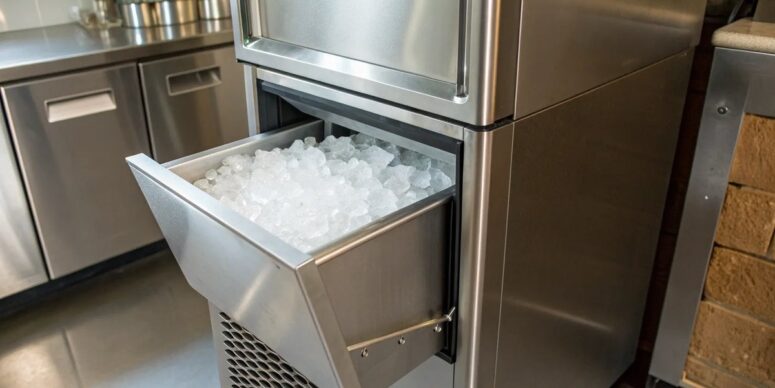
Hazard Analysis and Control Points
Map the path of water to ice to service: supply line, filtration, machine head, bin, scoop, transport, and service glass. Likely hazards include microbial growth on food‑contact surfaces, chemical carryover from cleaners or descalers, and physical contamination from damaged parts or nearby breakage. Logical control points are water quality and backflow prevention, the cleaning and sanitizing cycle, bin handling, scoop storage, and transport.
Limits, Monitoring, and Corrective Action
Define what “good” looks like: potable water with backflow protection, approved cleaners mixed to label concentration, a full rinse before restart, no bare‑hand contact, and a scoop stored outside the ice in a clean holder.
Monitor with shift checks for scoop placement, closed bin lids, and clear drains, plus cleaning and filter logs and supervisor sign‑offs. If contamination is suspected, discard all ice, clean and sanitize per the manufacturer’s steps, swap worn parts, retrain, and document.
Verification and Records
Use periodic ATP swabs or third‑party micro tests on contact surfaces, review logs weekly, and keep service and filter change receipts. Solid records speed inspections and support your case if a finding is disputed.
What Inspectors Commonly Flag
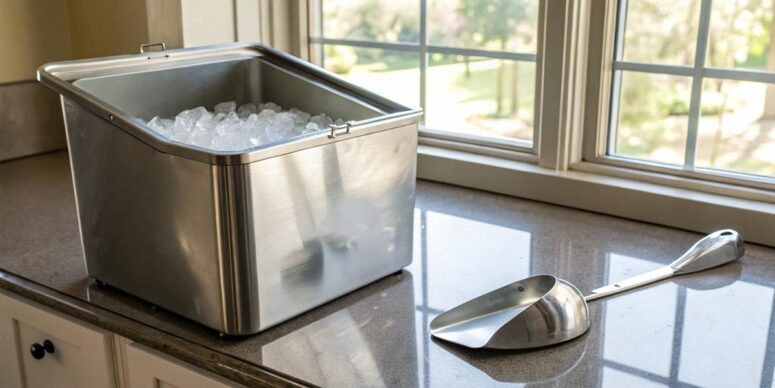
Auditors tend to see the same patterns across operations, especially when written procedures and visible controls are missing.
- Scoop stored in the bin with the handle touching ice
- No air gap or backflow protection on drain or supply
- Biofilm, mold, or scale visible in bin or head
- Service ice used for cooling containers or food
Posting a concise SOP near the unit, using a dedicated scoop holder, and dating the last cleaning make compliance visible at a glance.
Cleaning Cadence, Chemicals, and Documentation
Manufacturers lay out a precise sequence: de‑scale, clean, rinse, sanitize, reassemble, and discard the first ice batch. Daily wipe‑downs keep grime from taking hold; scheduled deep cleans break biofilm cycles; documented filter swaps maintain water quality and cube clarity.
- Daily: Wipe exterior touch points and the scoop holder; check for off‑odors or leaks
- Weekly: Lower the bin level and clean interior contact surfaces; sanitize the scoop holder
- Monthly: Inspect gaskets, curtains, spray bars, and drains for buildup; clean as needed
- Quarterly: Perform a full clean and sanitize per the manual; replace filters on schedule
Schedule quarterly deep cleans of your commercial ice machine to prevent biofilm and meet local code.
Use only manufacturer‑approved products, mix to label concentration, and rinse thoroughly to remove chemical residue before restart. Keep dated logs for each cleaning and filter change with staff initials and a manager review.
Water Quality, Filtration, and Drains

Start at the source. Use a potable supply with the right filtration for your water profile. Sediment filters protect valves; carbon addresses taste and odor; scale inhibitors reduce mineral buildup that can flake into ice and slow production. Mount filters where they’re easy to reach, label them with install and change dates, and align changes with your quarterly service.
Backflow prevention protects the supply line. For drainage, maintain a visible air gap from machine and bin drains to the floor drain, and keep that drain clear. Standing water or backups quickly turn into sanitation findings.
Handling SOPs: From Bin to Bar to Catering
Set a firm rule: no bare‑hand contact with ice. Use a clean, dedicated scoop or tongs, stored outside the bin in a holder that gets cleaned with the same frequency as the bin. Keep lids closed when not scooping, and never return partially melted or used ice.
Bars should run separate ice for service and for cooling beverage containers, with a spare scoop and holder ready so a contaminated tool can be swapped without delay. For catering or remote setups, transport ice in food‑grade, lidded totes that are cleaned and dried between events, assign a handler responsible for ice only, and keep totes off the floor. In healthcare and senior living, tighten the cleaning cadence and add verification swabs because vulnerable populations face higher risk.
Training and Visible Controls
Fold ice management into onboarding and daily huddles. Train staff on why ice is regulated as food, the exact cleaning routine for your make and model, where the scoop lives, and how to recognize early signs of slime, scale, or off‑odors.
Keep laminated SOPs posted at the unit with photos showing correct scoop placement and closed lids. During line checks, managers should verify and initial the ice station just like any other critical point.
Records That Withstand Scrutiny
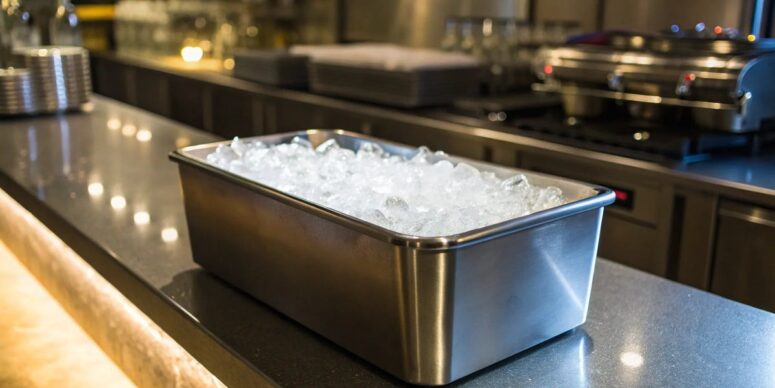
Maintain a single binder or digital folder with cleaning logs, filter changes, service invoices, and any corrective actions. Include brief notes on what happened, what was discarded, who did the cleaning, and when verification occurred. When a finding does occur, strong documentation helps you fix it fast and shows regulators you control the process.
Troubleshooting and When to Call Service
- Cloudy cubes or odd sizes: check filter age, scale buildup, and water pressure
- Slow production: inspect condenser coils for dust and confirm ambient temperature
- Off‑odors: empty the bin, deep clean, and verify drain function and air gap
If biofilm returns quickly after a proper deep clean, drains back up repeatedly, or error codes persist, call a qualified technician. Recurring problems often trace to failing sensors, worn gaskets, or water treatment mismatches that need professional diagnosis.
Putting It All Together
Ice safety is a daily habit supported by clear SOPs and proof on paper. Build it into your HACCP plan, set firm cleaning cadences, train your team, and verify what you expect. Start this week by confirming scoop storage, checking the drain air gap, reviewing your logs, and setting the date for the next deep clean. Small, steady steps keep biofilm at bay and inspections routine.
Contents